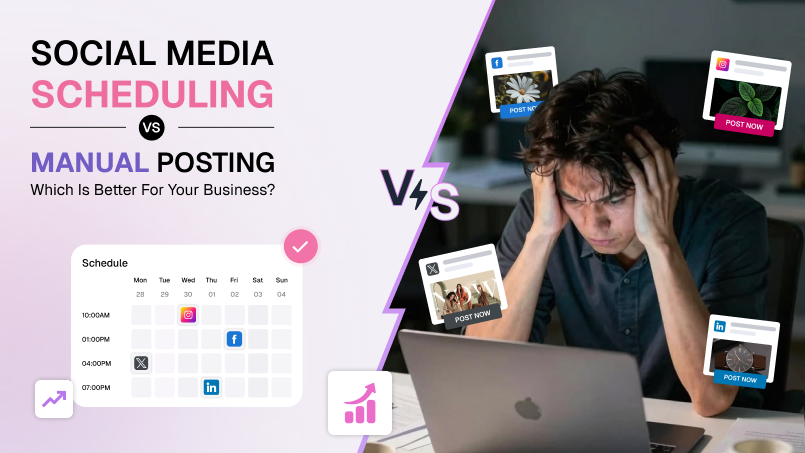
Social Media Scheduling vs Manual Posting: Which Is Better for Your Business?
Social media is one of the most effective ways for businesses, creators, and marketers to build an audience, promote products, generate leads, and strengthen their online presence. But maintaining a consistent social media presence raises an important question: Should you schedule your posts in advance or publish them manually every day?
Both approaches have advantages. Manual posting gives you direct control over every post, while social media scheduling helps save time, maintain consistency, and manage multiple platforms more efficiently.
In this guide, we’ll compare social media scheduling vs manual posting, explore the pros and cons of each approach, and explain why scheduling can be a better option for growing businesses and busy creators.
What Is Social Media Scheduling?
Social media scheduling means creating your content in advance and setting a specific date and time for it to be published automatically.
Instead of logging into Instagram, Facebook, LinkedIn, X, or other platforms every day, you can prepare several posts at once and schedule them for the upcoming days or weeks.
For example, a business could create:
- Monday: Educational post
- Tuesday: Product promotion
- Wednesday: Customer testimonial
- Thursday: Industry tip
- Friday: Short-form video
The posts are prepared ahead of time and published according to the selected schedule.
Tools such as AutoPubliX can help businesses and creators manage content, schedule posts, automate publishing, and manage multiple social media accounts from one place.
What Is Manual Social Media Posting?
Manual posting means creating and publishing content individually whenever you want it to go live.
For example, a social media manager may:
- Create an Instagram post.
- Write the caption.
- Upload the image or video.
- Publish the post.
- Repeat the same process for Facebook or LinkedIn.
This approach provides direct control over every publishing decision, but it can become time-consuming when a business manages multiple platforms or posts frequently.
Social Media Scheduling vs Manual Posting
Here is a quick comparison:
| Feature | Social Media Scheduling | Manual Posting |
| Time required | Low | High |
| Consistency | Excellent | Depends on the person |
| Bulk content creation | Easy | Difficult |
| Multiple accounts | Easier to manage | Time-consuming |
| Planning | Excellent | Limited |
| Real-time content | Possible | Excellent |
| Automation | High | None or minimal |
| Risk of forgetting posts | Low | Higher |
| Content calendar management | Easy | More difficult |
| Scalability | High | Limited |
Advantages of Social Media Scheduling
1. Saves Time
One of the biggest benefits of social media scheduling is time savings.
Instead of creating and publishing content every day, you can dedicate a few hours to planning and preparing content for an entire week or month.
This allows marketers and business owners to spend more time on:
- Strategy
- Customer engagement
- Campaign planning
- Analytics
- Lead generation
- Product development
2. Maintains Consistency
Consistency is essential for social media growth.
If you post regularly, your audience knows when to expect new content. Scheduling helps prevent gaps caused by busy schedules, meetings, holidays, or forgotten publishing tasks.
For example, you can schedule five posts on Monday and have them automatically published throughout the week.
3. Makes Content Planning Easier
Scheduling encourages you to think about your content strategically instead of posting randomly.
You can create a content calendar around themes such as:
- Educational content
- Promotional content
- Behind-the-scenes content
- User-generated content
- Customer stories
- Industry news
- Tips and tutorials
This creates a more balanced social media strategy.
4. Helps Manage Multiple Platforms
Managing one social media account manually can be manageable.
Managing Instagram, Facebook, LinkedIn, X, and other platforms manually is much more challenging.
A social media scheduling platform can help you organize content across multiple channels from one dashboard.
5. Reduces Missed Publishing Opportunities
Businesses can easily forget to publish a post when they rely entirely on manual posting.
Scheduling reduces this problem because the content is prepared and queued ahead of time.
You can plan posts around:
- Product launches
- Sales
- Events
- Holidays
- Campaigns
- Announcements
6. Supports Team Collaboration
For marketing teams and agencies, scheduling can make content workflows more organized.
A team can prepare content in advance, review it, make changes, and organize upcoming posts before they are published.
This is especially useful when multiple people are responsible for social media management.
Disadvantages of Social Media Scheduling
Scheduling is powerful, but it isn’t perfect.
1. Less Immediate
Scheduled posts are created ahead of time. If something unexpected happens, you may need to edit or pause your scheduled content.
For example, if there is a major industry announcement or breaking news, an old promotional post may no longer be appropriate.
2. Requires Planning
Scheduling works best when you have a clear content strategy.
You need to know:
- What you want to publish
- Who you want to reach
- Which platforms you will use
- How frequently you want to post
- Which topics are relevant to your audience
3. Engagement Still Requires Human Interaction
Scheduling a post doesn’t mean you can completely ignore your social media accounts.
Comments, messages, mentions, and conversations still need attention.
Automation should reduce repetitive work, not eliminate genuine audience engagement.
Advantages of Manual Posting
1. Real-Time Content
Manual posting is ideal for content that needs to be published immediately.
Examples include:
- Breaking news
- Live events
- Trending topics
- Flash sales
- Unexpected announcements
- Real-time updates
2. Greater Flexibility
When posting manually, you can make last-minute changes to captions, images, videos, hashtags, and other elements.
This flexibility can be valuable when circumstances change quickly.
3. Stronger Real-Time Engagement
Some businesses prefer manual posting because it allows the social media manager to publish content and immediately monitor reactions.
This can work particularly well for community-focused brands.
Disadvantages of Manual Posting
1. It Takes More Time
Publishing content manually every day can consume a significant amount of time.
Imagine managing five platforms and publishing several times per day. Each post requires its own publishing workflow.
Over time, these small tasks can add up to hours of repetitive work.
2. Higher Risk of Inconsistency
Busy schedules can cause businesses to miss planned publishing times.
You might intend to post at 10 AM but get caught up in meetings or other work.
Scheduling removes much of this pressure.
3. Difficult to Scale
Manual posting becomes increasingly difficult as your business grows.
A creator with one account may manage manual publishing easily. A marketing agency managing dozens of client accounts will likely need a more organized scheduling system.
When Should You Use Social Media Scheduling?
Social media scheduling is particularly useful when you:
- Manage multiple social media accounts
- Publish content frequently
- Run a small business
- Work as a social media manager
- Manage clients for an agency
- Want to maintain a consistent posting schedule
- Create content in batches
- Have limited time
- Run recurring marketing campaigns
For these situations, scheduling can significantly simplify your workflow.
When Should You Use Manual Posting?
Manual posting can still be the better choice when you need to respond to something happening right now.
Use manual posting for:
- Breaking news
- Live event updates
- Real-time announcements
- Trending conversations
- Time-sensitive reactions
- Spontaneous behind-the-scenes content
The best social media strategy doesn’t necessarily require choosing one method exclusively.
The Best Strategy: Combine Scheduling and Manual Posting
For most businesses, the strongest approach is a combination of scheduled and manual content.
You can schedule predictable content in advance while keeping some flexibility for real-time posts.
For example:
80% scheduled content
- Educational posts
- Product posts
- Tips
- Testimonials
- Blog promotions
- Evergreen content
20% manual content
- Breaking news
- Trending topics
- Live updates
- Community conversations
- Spontaneous content
This approach provides both consistency and flexibility.
How Social Media Scheduling Improves Productivity
Consider a social media manager who spends 20 minutes creating and publishing each post.
If they publish five posts every day, that’s approximately 100 minutes per day.
With batch creation and scheduling, they can prepare multiple posts during a dedicated content session and let automation handle the publishing.
The goal isn’t simply to post more. It’s to spend less time on repetitive publishing tasks while creating more time for strategy and engagement.
Social Media Scheduling for Businesses
Businesses can use scheduling to create structured content campaigns.
For example, an e-commerce business could schedule:
Monday: Product education
Tuesday: Customer testimonial
Wednesday: Product demonstration
Thursday: Industry tip
Friday: Promotional offer
Saturday: User-generated content
Sunday: Community-focused content
This gives the business a consistent weekly content structure without requiring someone to manually publish every post.
Social Media Scheduling for Content Creators
Creators often have to balance content creation, editing, audience engagement, brand partnerships, and other responsibilities.
Scheduling can remove one repetitive task from their workload.
Instead of stopping what they’re doing to publish a post, creators can prepare content in advance and schedule it.
This makes it easier to maintain a consistent publishing routine while focusing on creating better content.
Social Media Scheduling for Marketing Agencies
Agencies often manage social media accounts for multiple clients.
Manual publishing can become complicated when each client has different:
- Publishing schedules
- Content strategies
- Platforms
- Campaigns
- Approval processes
A centralized scheduling workflow can make client content easier to organize and manage.
How AutoPubliX Can Help
AutoPubliX is designed to simplify social media management by bringing content planning, scheduling, publishing, and automation into a centralized workflow.
With AutoPubliX, businesses, marketers, and creators can streamline repetitive social media tasks, manage multiple accounts, schedule content, and use AI-powered tools to support their content workflow.
Instead of spending every day manually publishing posts, you can prepare your content strategy in advance and automate the repetitive parts of your social media workflow.
Visit AutoPubliX.
Social Media Scheduling vs Manual Posting: Which Is Better?
There isn’t one answer for every business.
Manual posting is useful for real-time content, spontaneous updates, and situations where immediate flexibility is important.
Social media scheduling is better for consistency, productivity, batch content creation, and managing multiple accounts.
For most businesses and creators, the ideal strategy is to schedule your core content and manually publish important real-time content when needed.
This gives you the efficiency of automation without losing the authenticity and flexibility of human interaction.
Final Thoughts
Social media success isn’t just about how often you post. It’s about creating valuable content, maintaining consistency, engaging with your audience, and using your time efficiently.
Manual posting can work for individuals managing a small number of posts. But as your content volume and number of social media accounts increase, scheduling becomes increasingly valuable.
By combining social media scheduling, automation, and real-time engagement, businesses can create a more efficient social media workflow and spend more time on the activities that actually drive growth.
The future of social media management isn’t manual vs automation—it’s using automation for repetitive tasks while keeping humans in control of strategy, creativity, and relationships.
Frequently Asked Questions
Is social media scheduling better than manual posting?
For most businesses, scheduling is better for maintaining consistency and saving time. Manual posting remains useful for real-time and trending content.
Does scheduling social media posts save time?
Yes. Scheduling allows you to create multiple posts in advance instead of repeatedly logging into different platforms to publish content.
Can I combine scheduled and manual posts?
Yes. Combining both approaches is often the most effective strategy. Schedule evergreen content and manually publish time-sensitive or spontaneous content.
Is social media scheduling good for small businesses?
Yes. Scheduling can help small businesses maintain a consistent online presence without requiring someone to manually publish content every day.
What is the biggest benefit of social media scheduling?
The biggest benefits are time savings, consistency, better content planning, and easier management of multiple social media accounts.
Can AutoPubliX schedule social media posts?
AutoPubliX provides social media management and automation features designed to help businesses and creators schedule and manage their social media content more efficiently.